
It’s Almost Here Again: The Spring Slide


What is the Spring Slide?
The Spring Slide refers to what we all sense every year: a decrease in student attendance in the spring semester. According to TASC, 25% of students are more likely to miss school in the spring than the fall.
Why?
- 17% of those students reported that “nothing really happens in class during the last few weeks of school.”
- 3% of those students said they don’t go because they want to hang out with their friends outside of school
There are many factors that contribute to the Spring Slide, including:
- Having final showcase events like Graduation or Prom too early
- Post Testing Mindsets
- Spring Weather (warmer + more allergies)
- Field Trip Policies
- Early Vacations
- No after school care
These numerous factors can make it extra challenging to stay energized and motivated to encourage their students to show up for school, every single day.
What Does the Research Say About Why it Matters and the Power of Proactive Work?
In short, the Spring Slide is serious and real, absenteeism is prevalent and predictable, but it’s never too late to make proactive, positive changes.
Spring Absences are More Harmful
Research from Jing Liu, Monica Lee, and Seth Gershenson shows that while all absences matter, spring absences are more harmful than fall absences because of the increased rigor in those spring lessons. Building and expanding upon the groundwork done in the fall, missed lessons in the spring means losing more substantial learning opportunities.
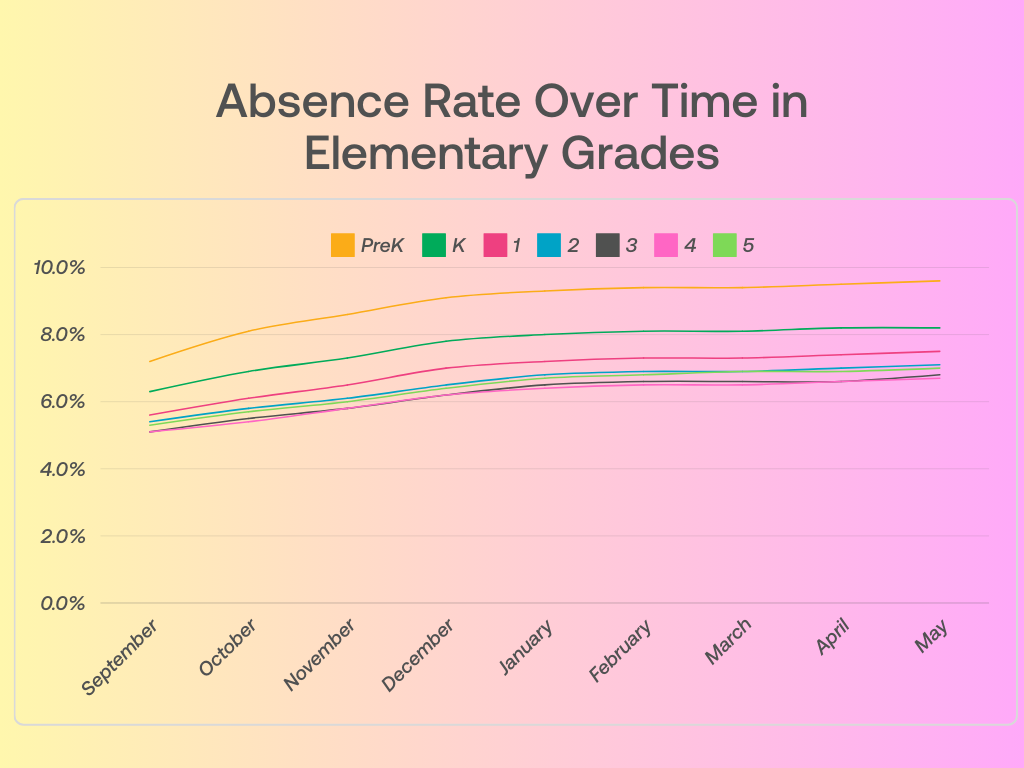
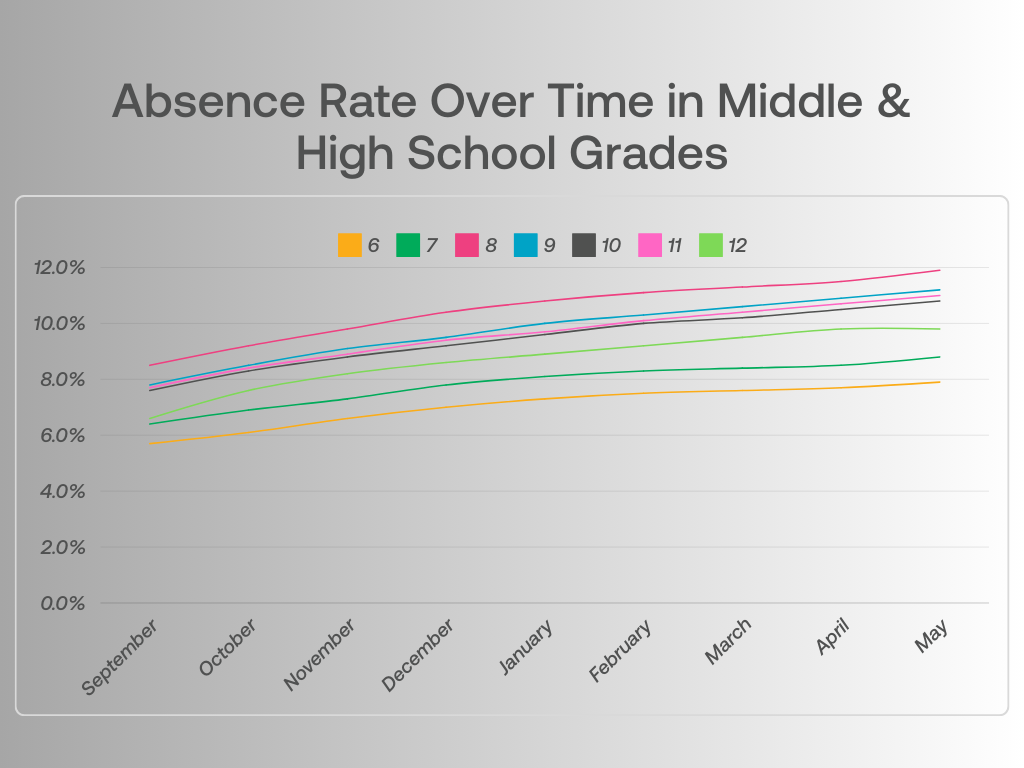
Many think that the Spring Slide is limited to high school students, but our data analysis reveals that this is simply not the case. In fact, absence rates in the 23-24 school year for grade 12 improved in May! Aside from the seniors, students in all grades saw increased absence rates beginning in the spring months through the end of the school year, with some grades seeing more pronounced inclines than others.
Get Ahead Sooner
Research shows that early intervention is critical to ensuring that more students end the year with good attendance. This is even more evident in an analysis of 23-24 school year student data, showing that even by the smallest increments, a student’s absence rate in February was a huge predictor of whether they would end the year chronically absent.
Comparing Students Ending the Year Chronically Absent Based on Cumulative Absence Rates in February (SY 23-24)
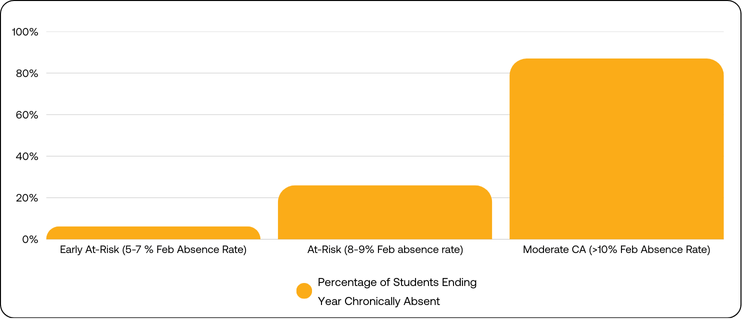
With this knowledge, doubling down on proactive intervention is even more critical. Connecting and communicating with families of students who are moderately chronically absent, at-risk, or even early at-risk, can pay big dividends by the end of the school year.
What are some ways to beat it?
Create targeted “Spring Slide” campaigns
We’ve all implemented “Back To School” campaigns. But the spring is a severely underrated time to launch a campaign to engage families, staff & students in a renewed attendance focus. Work with your attendance team to identify & share resources with staff and your school community around the importance of showing up to school before and after spring break, and implement creative incentives to increase enthusiasm around showing up to school every day.
Hold culminating events + activities like Prom & Graduation at the very end of the year
These celebratory events signal to students that school is coming to a close, and attendance often dips significantly after these big events.
Ensure after school programs go through the end of the year
Not having access to after school care is a significant barrier for families. Oftentimes after school care is contracted through a separate organization. When their calendar doesn’t align with the school calendar, this can mean significantly lower attendance on days when care is not provided.
Design targeted interventions for students on the cusp of becoming chronically absent (ie: missing between 8-12% of school).
In the early spring months, there is still time to catch students before they end the year being chronically absent (missing 10% or more of school). However, if strong interventions aren’t in place when spring approaches, the spring slide can lead to students falling behind and ending the year chronically absent. If you’re able, take a look at your attendance data to detect any patterns or trends that you can design targeted outreach for. For example, if you learn that a student at risk of becoming chronically absent is frequently missing Mondays, reach out to the family, determine what’s interfering with Monday attendance and tie an incentive to Monday attendance.
Any fun ideas from educators like me?
Our partners in Berkeley USD hold an annual March Madness competition, building excitement and engagement districtwide. This is made even easier with the right tools, beginning with leveraging League Lobster to set up the competition. As the competition progresses,they quickly pull the latest attendance data every week from the EveryDay Labs Platform to find the week’s attendance winners and keep the competition going.
Our partners in Elk Hills host a very well-attended annual Easter Egg hunt the day before Spring Break. To get ahead of the many vacation extenders who may be visiting family out of town, they intentionally plan their holidays to go through Monday, returning to school on Tuesdays instead.
The Spring Slide is common, but widespread absenteeism doesn’t have to be inevitable. By getting a head start, you’ll be enjoying balmier weather and fuller classrooms this spring!
Explore Our Latest Insights
Stay informed with our recent blog updates.

High Impact Attendance Priorities for April
We all know about the Spring Slide, and as we dive into April, many of us may be seeing some of those springtime challenges. That’s why in this month’s professional learning session for EveryDay Labs partners, we surfaced five key attendance priorities for the month of April. Read on and get focused!
From Data to Action: How EveryDay Labs Data Dashboards Support Leaders & Attendance Teams
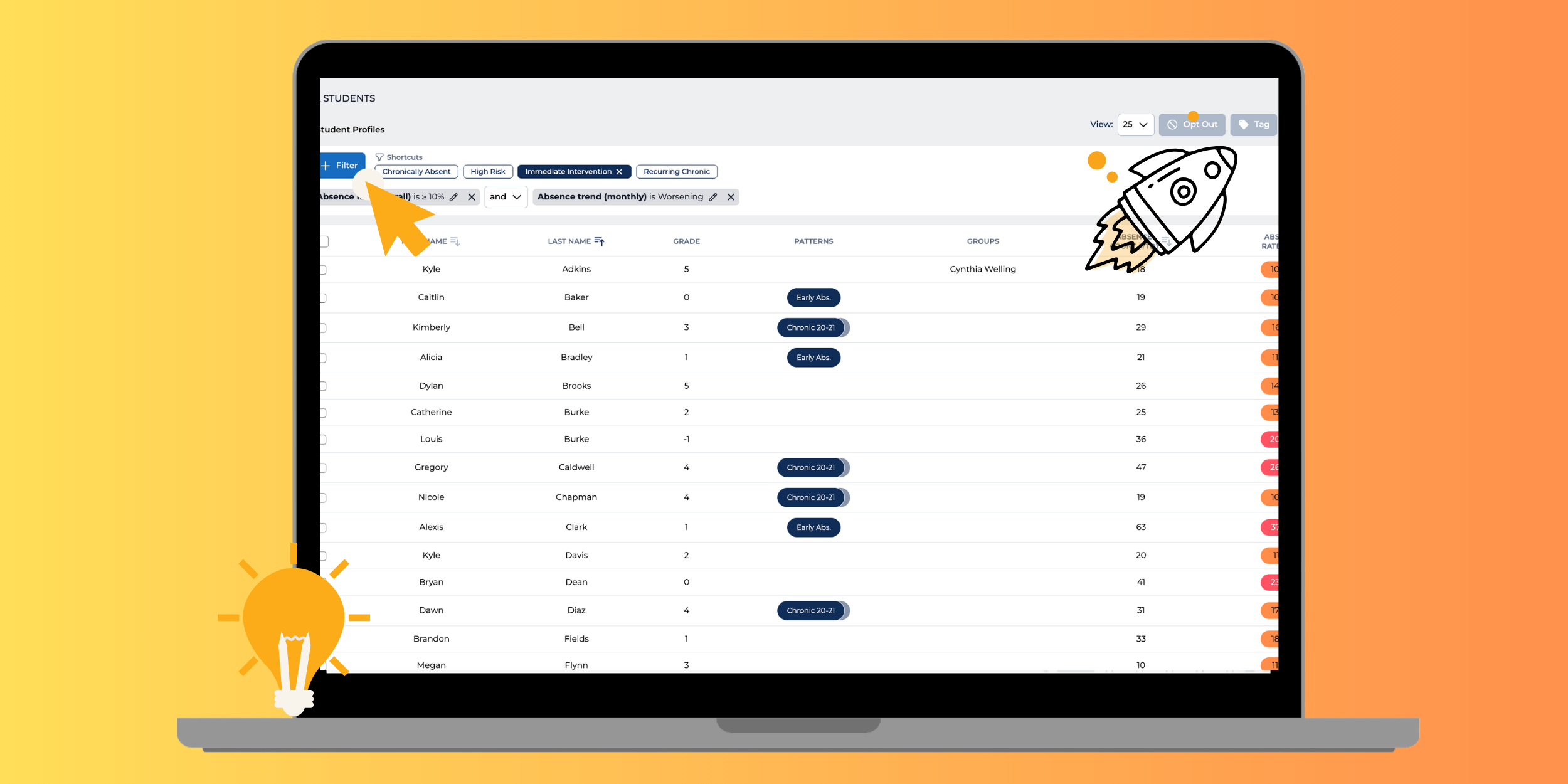
Part of our comprehensive attendance solution, EveryDay Platform not only provides district and school educators with a multi-channel communications hub and intervention tracking tools, but also robust and beautifully simple dashboards that present a clear, real-time view of attendance patterns, trends, and risk indicators at the student, school, and district levels. By bringing multiple layers of information together in one intuitive interface, the data dashboards within the EveryDay Platform help teams quickly move from “What’s happening?” to “Here’s what we’re doing next.” Read on and explore the trusted attendance data dashboards that educators consistently find most valuable.
Join Our Community of Learners
Stay updated with our latest insights and share your thoughts with fellow educators and parents.
